



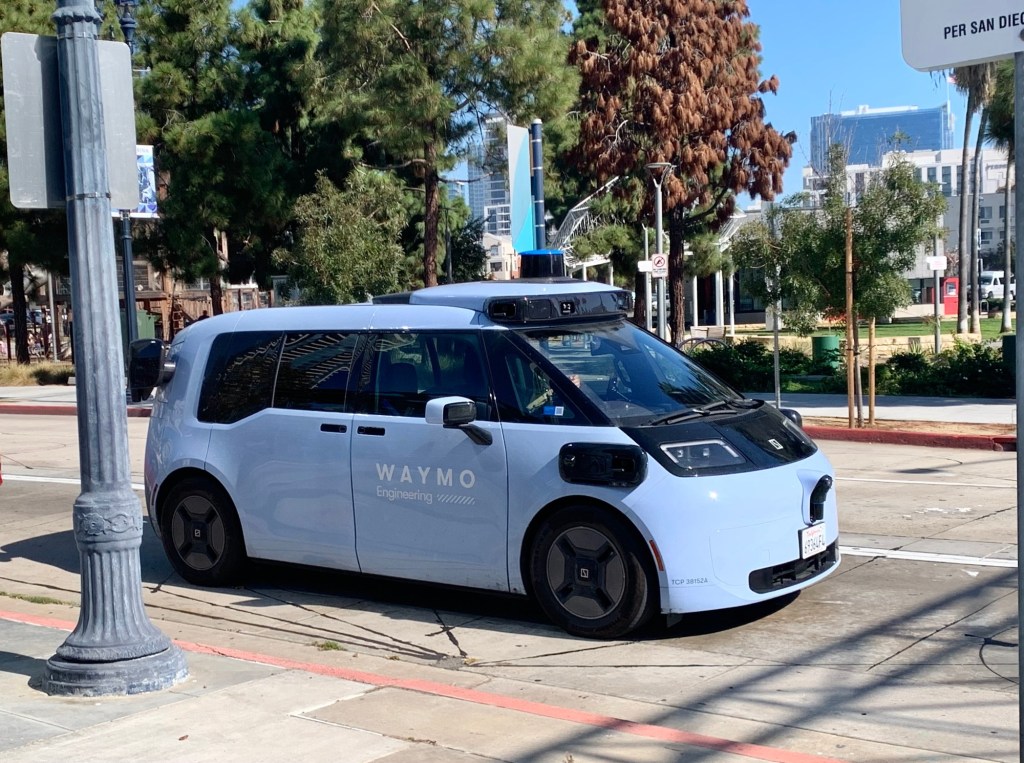

When Waymo begins driverless taxi service in San Diego next year, it will be using Chinese vehicles rather than the familiar Jaguars seen elsewhere. The choice to rely on technology from America’s primary rival on the international stage is attracting criticism, which I see as misplaced.
Today, Waymo fares average around $8.00 plus $1.60 per mile in Los Angeles. That is way more than Angelenos on modest incomes can afford to pay on a regular basis. To provide social benefits across the income spectrum, robotaxis will have to become cheaper.
That will naturally occur as Waymo achieves operational efficiencies and begins to face competition from other autonomous vehicle companies. But the high cost of the driverless vehicles themselves will remain a factor: providers have to factor capital costs into their pricing and high per vehicle costs limit the number of cars that can be placed into service.
Chinese vehicle manufacturers have made much greater strides in reducing production costs, and US mobility providers would be remiss if they did not take advantage of Chinese innovations. Chinese conglomerate Baidu recently purchased autonomous electric vehicles to serve the Wuhan market at a cost of around $30,000 per vehicle. This compares very favorably to the estimated cost of over $120,000 Waymo incurred to purchase and retrofit its original Jaguar I-PACE robotaxis.
One objection I have heard against Waymo importing Chinese-manufactured Zeekr automobiles is that the vehicles will be loaded with listening devices sending our discussions back to the People’s Liberation Army. While I am not sure that Chinese intelligence agents will be especially interested in the many ordinary conversations San Diego Waymo passengers will have, I am confident that an Alphabet subsidiary that was first to solve robotic driving can scan their vehicles for unwanted bugs.
Zooming out from the issue of robotaxis to the broader issue of US-China trade generally, we too often confuse geopolitical concerns with our interests as individual consumers. China is often accused of flooding our markets with cheap, often subsidized products. But American consumers benefit from inexpensive goods, and we consumers far outnumber the US-based employees of companies obliged to compete against these cheaper imports.
This is especially relevant in California where affordability has become a top political issue and where shipping costs of Chinese-manufactured goods are lower. While more imports of Chinese vehicles may be bad for Michigan automakers, it could create additional jobs at California ports.
The argument against “dumping” by China and other export-driven economies is that once exporters put all US competitors out of business it can raise its prices to extortionate levels. This ignores the fact that competitors in third countries can undercut those extortionate prices. Ultimately, domestic companies can re-enter the market as well.
Advocates of trade barriers against China cite the country’s poor human rights record and its belligerence toward neighbors. But the US has traded with and continues to trade with other countries, like Saudi Arabia, which also have dubious records in these regards.
China may be different because many fear it is the rising nation that will one day replace America as the dominant world power. This concern is undercut by the country’s demographic challenges: China is losing people and this population decline will accelerate in the coming years. Further, is it really that important to our day-to-day lives whether we live in the number one or number two world power? People living in Australia, Denmark, and Switzerland generally enjoy a high quality of life despite the fact that their nations are not among the world’s most powerful.
Whether its self-driving cars, solar panels, or toys, Californians should welcome the opportunity to make our state more affordable by taking advantage of lower cost Chinese products.
Marc Joffe is a Visiting Fellow at California Policy Center.
