



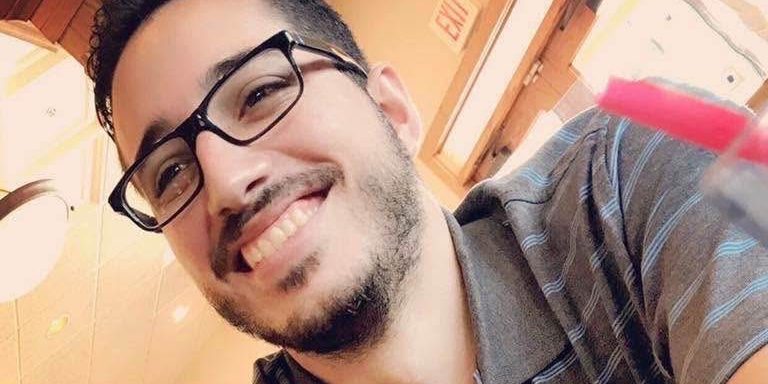
As the Stardust Racers roller coaster sped downward in the first descent of a mid-September ride, Kevin Rodriguez Zavala was flung forward, his head slamming into the seat in front of him repeatedly. Blood from his wounds splattered his girlfriend, who tried to hold him back while screaming for help.
Dr. Anna Marshall, a vacationing medical doctor standing in line to board the Epic Universe ride, said that when the coaster returned and stopped, she heard someone screaming and ran to help. The ride staff seemed “frozen,” she later told sheriff’s deputies. And she was shocked by Zavala’s condition.
He was unconscious and one of his legs “was completely broken in half and resting on the back of the chair,” the doctor said. The 32-year-old would be pronounced dead at a hospital later that night.
The new details about Zavala’s Sept. 17 death, including what witnesses saw that night, were released Thursday by the Orange County Sheriff’s Office, which wrapped up its investigation and determined the death was accidental and that no criminal charges were warranted.
The report did not seek to explain what led to Zavala’s fatal injuries, however. The Kissimmee man had a spinal condition since birth and used a wheelchair, his family said. He was also a roller coaster enthusiast, they added, and he and his girlfriend had ridden on two other Epic coasters that day before his fatal trip on Stardust Racers.
Universal Orlando did not respond to a request for comment.

The company’s internal review found that ride systems “functioned as intended,” equipment remained intact, and park employees correctly followed procedures, according to a memo Universal Orlando Resort President Karen Irwin sent to staff in the wake of Zavala’s death.
In the sheriff’s report released Thursday, Zavala’s girlfriend, Javiliz Cruz-Robles, told authorities that it took park staff “multiple times” to secure her boyfriend’s restraint bar before the ride started but she described the lap bar as “in the green.”
Asked if Zavala was in the seat correctly, Cruz-Robles said he was, but she felt the lap bar — the ride’s only restraint — was too low on his body, according to the report. A surveillance video showed that Zavala appeared to be “engaged and well” at the ride’s launch point, the report states.
Marshall told investigators she thought Zavala was dead as soon as she examined him. He was “completely slouched over with blood surrounding him,” the report said.
“Dr. Marshall continued to try and see if she could feel a pulse, first on his arm and then on his neck … she could not find one,” according to the report.
Marshall said that she was shocked by the condition of Zavala’s legs, especially the broken femur.
She felt compelled to act as “ride staff appeared to have been frozen,” she added.
Other witnesses said that when the ride finished, they saw that Zavala was unconscious, and his arm was hanging over the side.
It took emergency crews and park staff about 10 minutes to release the lap bar holding Zavala in place, the report said.
“The guest was stuck on the ride vehicle face down, falling out of the seat with legs inverted,” a paramedic stated. Another paramedic reported that Zavala’s body “was distorted.”
The paramedics also reported that there was “a significant amount of blood loss.” A sheriff’s investigator, later examining the ride cart where Zavala had sat, “saw a significant amount of blood on the chair and the bar in front of the chair,” the report said.
At Orlando Regional Medical Center, where Zavala was transported, Cruz-Robles “was visibly shaken, crying and stated she was having panic attacks while speaking to deputies about the incident and was unable to write a statement herself,” according to the report.
The Orange-Osceola Medical Examiner’s Office later ruled that Zavala’s death was an accident and caused by “multiple blunt impact injuries.”
“Because it was determined that no criminal acts occurred in this case, this concludes the Orange County Sheriff’s Office role in this case,” according to an email sent by the sheriff’s office Thursday along with the report.
Zavala and Cruz-Robles had spent the day at the park. His family and friends described him as a “roller coaster freak,” someone who relished going to theme parks and enjoyed dozens of rides throughout his life.
Just before 9 p.m., the couple boarded Stardust Racers, a twin coaster attraction that opened in May within the Celestial Park section of Epic Universe.
At the peak of the ride, carts reach a height of 133 feet. The ride’s most prominent feature is a “celestial spin” where the two tracks twist around each other in a barrel roll.
Riders are restrained only at the lap by a solid bar that lowers from overhead, without any shoulder straps.
Universal closed Stardust Racers while it probed Zavala’s death, reopening it on Oct. 4 with updated safety guidelines and signage.
The park now advises that parkgoers using wheelchairs and mobility devices must be able to walk independently to ride Stardust Racers and certain other attractions. Park workers told investigators they used a “lateral transfer” device to help get Zavala into the ride’s cart.
The Florida Department of Agriculture and Consumer Services, the agency that regulates amusement rides, concurred with Universal’s findings about the accident.
State officials did not file any incident or investigative reports about Zavala’s death, according to the agency’s response to a public records request from the Orlando Sentinel.
Florida allows Universal Orlando, Walt Disney World and other major attractions to operate rides with minimal state oversight. Theme parks with over 1,000 employees and their own in-house safety inspectors are exempt from state inspections, though they are still required to file annual inspection affidavits with the state.
