




Recently I was challenged to list what I would do, if elected governor of California, to fix the once Golden State. We know California doesn’t need another gubernatorial candidate. Since I’m a registered Republican, the voter registration demographics are not favorable, there is virtually no road to victory even if I wanted to run. As this is now a top-two “jungle election” state, another Republican entrant would only make the chance of two Democrats appearing on the November 2026 ballot more likely. (So, Honey, calm down.)
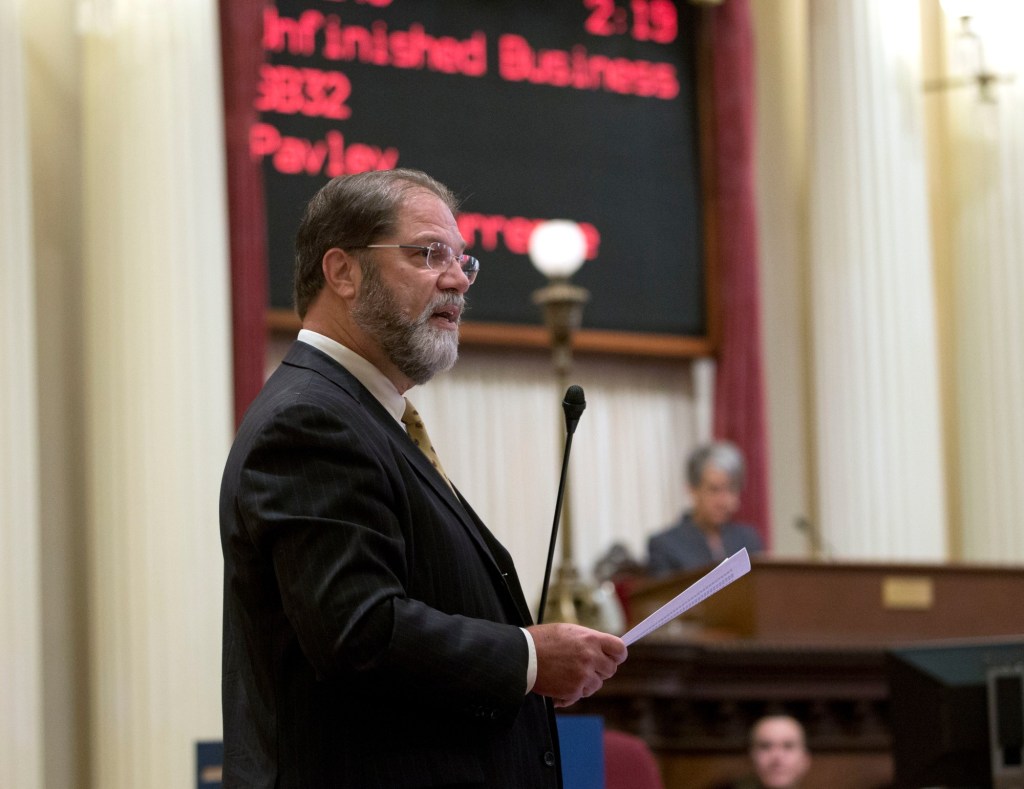
Having said all that, I have served in Sacramento for nearly six years as a state senator and I was the only certified public accountant (CPA) at the time in the Legislature. Unfortunately, the supermajority did not take most of my suggestions and California has dropped to 44th place out of 50 states on its per capita unrestricted net position (UNP). Since I’m a numbers person, and I know I would probably only have four years to accomplish an agenda, so reducing debts through a much better budgeting effort would be the top priority.
But there’s much, much more to do. So, here are the ten (of what could be an infinite number of) priorities I would pursue:
1. Establish the position of Chief Operating Officer.
This is something I tried to do with Senate Bill 1297 (2018). It was approved by the ten-member Senate Governmental Operation Committee without opposition. But it was killed by the Senate Appropriations Committee, then chaired by Sen. Ricardo Lara, who is facing a hostile media on his travel habits as the current elected California Insurance Commissioner. Obviously, having someone with business expertise running the massive 300-plus agency bureaucracy didn’t mesh with his personal management style. The current governor is just too busy doing political gymnastics, like blaming everything on the U.S. President, to effectively run the ship of state. Install someone who can oversee the organizational chart and make personnel changes as necessary when necessary.
2. Look for opportunities to make local government more efficient by merging counties and cities where appropriate.
Alpine County has roughly 1,100 residents. Why should it have an independently elected Sheriff, District Attorney and five Supervisors? Merge it with either Amador, Calaveras, El Dorado, Mono or Tuolumne County. Amador City has some 200 residents and can’t afford an annual financial statement audit. Merge this smallest city in California with the nearby city of Sutter Creek or have it disincorporate and let the Amador County Board of Supervisors run this tiny 0.3 square mile area.
3. Stop the High-Speed Rail boondoggle.
The state could build a high-speed autobahn for a fraction of the cost to move residents from the southern half of the state to the northern half and vice versa. I tried to do this with Senate Bill 319 (2019), but legislators are not permitted to recommend new roads. But, as Governor, I would divert the funding from the rail to this lane idea immediately.
4. Request that the State Auditor implement “extensible business reporting language” (XBRL) in its annual comprehensive financial report.
It’s mandatory for publicly traded corporations. It will allow better digital research of the state’s finances. I tried to move this agenda forward with Senate Bill 598 (2019), but the supposed “digital” governor, Gavin Newsom, vetoed the bill. I would pursue this initiative immediately and then require that all the counties and cities follow suit.
5. Cities and counties are to complete their annual audits within six months after their June 30 fiscal year end.
Too many cities blow through this deadline. Fort Jones in Siskiyou County still has to issue its annual comprehensive financial report for 2019! I would impose much harsher penalties for delinquent municipalities then those just implemented with Senate Bill 595 (Choi). If the disclosure of how a city or county is managing its tax dollars is not important to elected leaders, then a serious financial penalty will wake them up. Just try waving a ten percent penalty when you pay your county tax collector a day late. Not only should California’s municipalities complete timely audits, but they should also be posted on a repository website operated by the governor. And I would also demand that the auditor’s management letters be posted as well. These important documents list where the client needs to improve its accounting systems and internal controls. Be transparent.
6. Trim down Sacramento’s appetite for noncore services.
Recently established Cal Saver needs to be abolished and handed over to the private sector. Handling the defined contribution pension plan for nongovernmental employees is not a core function of government. It’s a “feel good” mandate that requires more state staffing with employees who, ironically, receive massive defined benefit pension plan benefits that need to be funded. And there are plenty more noncore activities, like public banks, that should be eliminated.
7. Slash the number of commissions.
Speaking of more than 300 separate departments, there are also innumerable commissions with appointees who must be flown into Sacramento and hosted at a hotel for an all-day meeting that also remits a stipend. Some of these commissioners receive six-digit annual salaries. It’s a great way for Newsom to take care of termed-out Democratic legislators who need a new source of income. Gov. Arnold Schwarzenegger called this initiative “blowing up the boxes.” I would pursue it in a heartbeat. And besides, these commissions add little to no value.
8. Make paying off any loans from the federal government, used to pay unemployment benefits, a top budgetary priority.
California is one of two states in the nation that does not do this. It forces the federal government to increase employer Federal Unemployment Tax Act (FUTA) tax rates. Newsom has pushed his debts onto business owners, which then reduces net income, which then reduces income tax revenues. It’s a dastardly co-signing obligation that Californians never signed up for but has been unilaterally thrust upon taxpayers by a fiscally derelict governor.
9. Actually have a financial plan.
During its efforts to deal with a $1.7 billion investment pool loss back in 1994, Orange County implemented prudent fiscal strategies. One was a ten-year strategic financial plan. Another was an initiative called Results Oriented Government with annual detailed business plans by every department that aligned with the annual budget, which aligned with the ten-year plans. These smart budgetary directives need to be established in Sacramento. Then they need to be required at the county level and followed by cities. Then the state’s university systems. Developing solid financial road maps dealing with major debts, like unfunded actuarial accrued pension liabilities, other post-employment benefits, and future capital improvements, like maintaining roads or larger public works projects, needs long-term plans. In cities where they are followed, their fiscal status improves with each passing year. The city of Newport Beach is an excellent blue print to consider.
10. One last effort I would pursue again is establishing “Educational Savings Accounts” for California’s students.
I tried to accomplish this with Senate Bill 1344. California’s educational system is failing, and healthy competition would fill the bill. Giving parents the actual share of spending on their children and letting them decide how and where it is spent would not cost any more but would improve educational outcomes. As governor, I would make this school choice alternative an important component of my short stay in the office.
I say short stay, as I’m sure the public employee unions would mount recall efforts on a regular basis if I could reorganize Sacramento with these long overdue managerial changes. And I haven’t even mentioned restructuring California’s nationally high tax rates and regulatory nightmares.
I bet four years as governor would fly by quickly, as pursuing these ten initiatives would fill every day in office with activities. Plus, you can bet there will be many other DOGE-like projects to pursue to streamline state government. Turning the Department of Finance upside down would be so much fun. Provide me with a green shaded visor and this accountant would have a field day shaking up Sacramento in this statewide office.
Let’s hope the next governor can accomplish just one of these priorities in righting the fiscal ship of state.
John Moorlach is a senior fellow at California Policy Center. He previously served in the California Senate and on the Orange County Board of Supervisors.
