



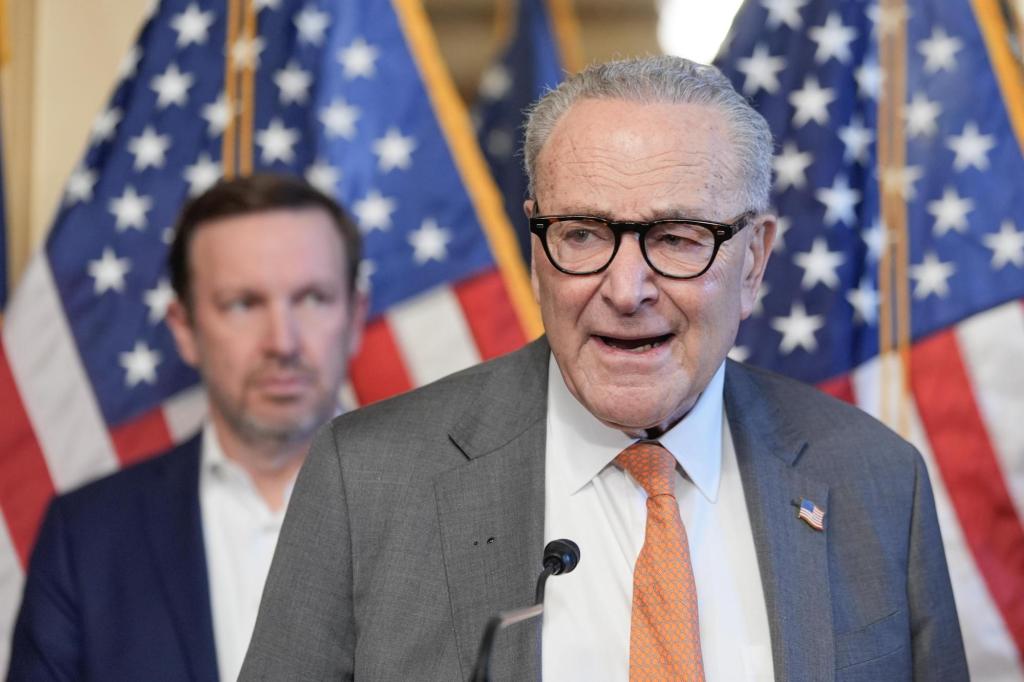

On December 31, the enhanced subsidies for Obamacare policies that were enacted in 2021 and extended through 2025 are set to expire. The U.S. Senate held a couple of votes on Thursday but did not renew them. So it may be that on January 1, the program will return to the original Obamacare subsidies.
Democrats are portraying the imminent return of original Obamacare as a Republican effort to destroy healthcare. They have finally admitted that the Affordable Care Act is a dismal failure.
The original program that’s about to return used tax dollars to subsidize health insurance policies for people who earned up to 400% of the federal poverty level, capping their premiums at between 2% and 9.96% of their income. But the money wasn’t sent to the policyholder. It was sent straight to the insurance companies after the Internal Revenue Service administered a complicated system of “advance premium tax credits” based on an income projection. Later, the taxpayer would have to settle up with the IRS based on actual income, either receiving a higher subsidy or paying some of it back.
Soon after President Joe Biden took office he signed the American Rescue Plan, which temporarily increased the Obamacare premium subsidies and removed the income cap of 400% of the federal poverty level. Then in 2022, the Inflation Reduction Act extended these enhanced subsidies to the end of this year.
Democrats have been frantically trying to coerce Republicans into extending the expiring subsidies, even insisting, unsuccessfully, on renewal of the subsidies as a condition for ending the recent government shutdown. So far, Republican leaders in Congress have held firm, ready to allow the enhanced subsidies, which were always supposed to be temporary, to finally end.
This appears to be a fight about fraud, and whether it will be exposed in January or stay hidden for another year or more.
If there’s one thing we’ve learned about Team Biden, it’s that fraud didn’t bother them.
For example, in August 2022, the Biden Treasury Department informed the Office of Management and Budget that the IRS would not be permitted to estimate, report or address “improper payments” in four COVID relief programs: Economic Impact Payments, Recovery Rebate Credits, Sick and Family Leave Credit and Employee Retention Credit.
“Due to the short-term nature of pandemic-related programs, estimating the amount and rate of improper payments, assessing the root cause, and developing corrective action plans to reduce payment errors in the future would provide minimal value and be an ineffective use of resources,” the Biden team told the IRS, according to a report released in May by the Treasury Inspector General for Tax Administration, also known as TIGTA.
The IRS was still required by law to evaluate these programs’ risk of improper payments. It found them to be “susceptible.”
Estimating and reporting improper payments in certain tax credit programs is something the IRS does every year at the direction of Congress. TIGTA checks in to see whether the agency has reached the goal of reducing improper payments to below 10 percent. They haven’t.
Improper payments are defined by the 2019 Payment Integrity Information Act as “any payment that should not have been made, was made in an incorrect amount, or was made to an ineligible recipient.” The problem was not new in 2019. Similar laws seeking to stop improper payments were enacted in 2016, 2013, 2010 and 2002.
None of them solved the problem. In fiscal year 2024, the Earned Income Tax Credit alone was the source of improper payments totaling $15.9 billion. Overall, the IRS found $21.6 billion in improper payments in fiscal year 2024, spread over the four “high-risk” tax credit programs they regularly examine.
One of those programs is the Obamacare subsidy. Its formal name is the Net Premium Tax Credit, or PTC. The IRS found that in fiscal year 2024, the “improper payment” rate for the PTC was 28.5%.
The enhanced subsidies for Obamacare were made especially vulnerable to fraud. The Biden team considered document-based verification to be a barrier to coverage. The government required only self-attested projected income. There was supposed to be a settle-up of the correct subsidy amount the following year, but the penalties for failing to reconcile the subsidy with actual income were suspended.
By effectively eliminating any enforcement of income accuracy and “streamlining” away documentation requirements, the Biden administration opened the door to massive fraud. Not only could individuals understate their income to receive larger subsidies, shady brokers could sign people up for coverage without their knowledge, or even enroll fictional people in Obamacare policies. This would generate commissions for the brokers and profits for the insurers, who received government payments for the premiums for these policies but never had to pay any claims on them.
A recent study by the Paragon Health Institute, a think tank founded in 2021 by a former Trump administration official, cited data from the Centers for Medicare and Medicaid Services showing that the number of enrollees who didn’t use their benefits at all tripled between 2021 and 2024 to reach 11.7 million.
Paragon’s researchers estimated that “improper enrollment” jumped from 5 million in 2024 to 6.4 million in 2025, at a cost to taxpayers of more than $27 billion this year alone.
It didn’t help that the Biden administration allowed the auto-renewal of coverage without annual verification of income eligibility. In 2025, nearly 11 million Obamacare enrollees were automatically re-enrolled.
Freed from the “barriers” of documentation, enrollment soared. Before the enhanced subsidies began in 2021, there were about 12 million people enrolled in coverage from the Affordable Care Act marketplace. This year, it’s 24 million. But how many are real?
The Department of Health and Human Services tried in August to implement a new “Marketplace Integrity and Affordability Rule” to fight fraud. It was immediately challenged in court, postponing enforcement.
Fraud in government programs has plenty of bodyguards.
Write Susan@SusanShelley.com and follow her on X @Susan_Shelley
